

Utility Trenching in Derby, CT: A Homeowner's Guide
Kash CochranePublished
- trenching
- derby ct
- utility lines
- cbyd
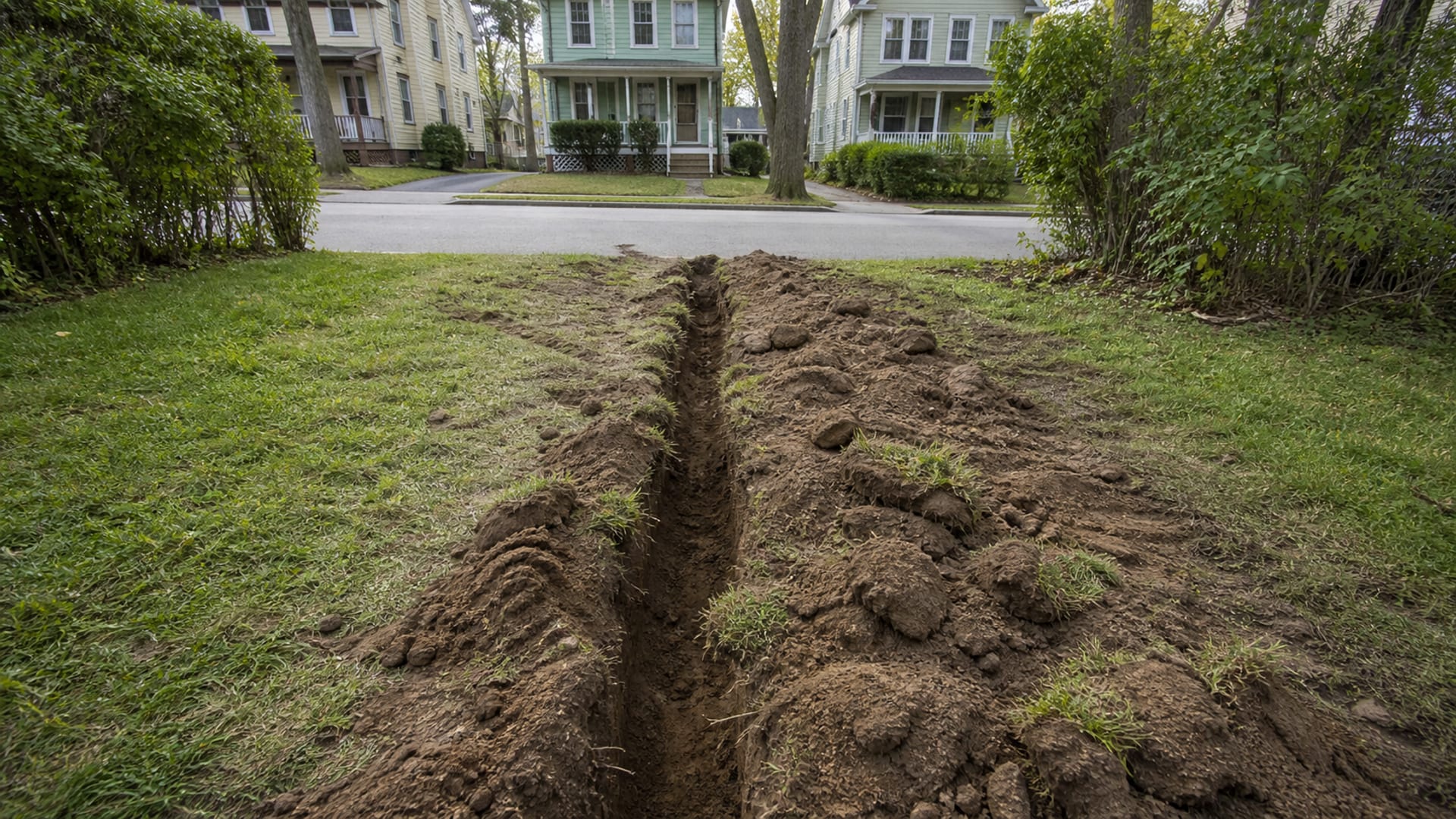
Your house went up around 1965 and nobody has kept a record of what runs under the driveway since. Now the water line needs replacing, or the sewer lateral has failed, or the electric service has to come in underground, and the part that keeps you up is not the digging. It is the not knowing. You have heard that you call 811 and somebody comes out and paints the lawn, and you have also heard stories about a machine finding something nobody painted. Both of those are true, and understanding why is what turns this from a gamble into a plan. A locate closes one gap. Derby's permit structure closes another. Trench safety rules close a third. They are not three versions of the same hoop, and a contractor who treats them that way is the one to worry about.
Key Takeaways
811 is required, and it has a hard lead time
Connecticut requires notice at least two full days ahead, excluding Saturdays, Sundays, and holidays, and no more than 30 days ahead, for any non emergency excavation using power operated equipment.
A locate does not map your private lines
the one call system alerts registered facility owners. Facilities that are not registered, which often includes private lines on your own property, are not guaranteed to be found by it.
Sewer work has its own authority in Derby
the Water Pollution Control Authority publishes its own regulations and application for a new connection, a repair, or a disconnect, and work in a public way needs a City street opening permit on top of that.
A state highway changes the order of operations
for a sewer connection in a state highway, Derby's WPCA regulations require the Connecticut Department of Transportation permit before the WPCA connection permit is issued.
Trench depth decides the safety burden
OSHA requires cave in protection for excavations, with narrow exceptions for stable rock or a cut under five feet where a competent person finds no indication of cave in. That determination is a jobsite requirement, not a homeowner judgment call.
Know What Your Locate Actually Covers Before Anyone Digs
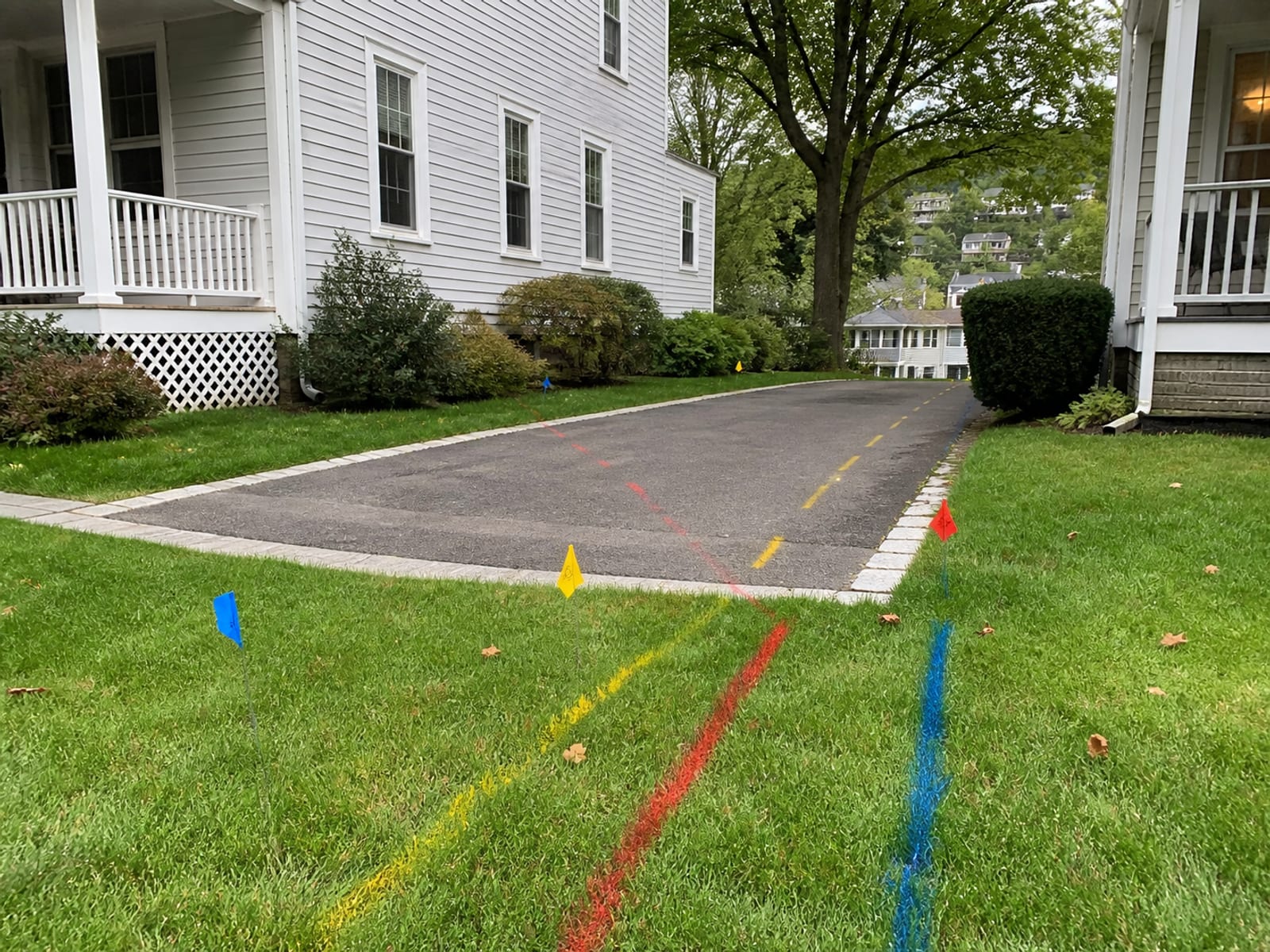
The single most useful thing to understand about Call Before You Dig is the shape of the gap it leaves. The system works by notifying registered facility owners so they can mark their facilities in the field. That covers the gas main, the electric distribution, the water main, and the communications lines that belong to utility companies.
What it does not automatically cover is anything private. A line running from the house to a detached garage, an old irrigation loop, landscape lighting, a propane run to a fire pit, a well line, septic components, or a previous owner's abandoned drainage can all sit in the same ground and appear on nobody's map. On a Derby parcel with sixty years of accumulated history, that is not a remote possibility. It is the normal condition.
So the working sequence is: call 811, wait out the required notice period, then walk the marked route against the actual work plan and separately identify what belongs to the property. Where anything is uncertain, that gets field verified before powered equipment goes near it. Marks on the grass are information, not permission.
| Trigger | What is required | Who administers it |
|---|---|---|
| Mechanized excavation near underground facilities | CBYD notice, 811, at least two full days ahead excluding weekends and holidays, and no more than 30 days ahead | Call Before You Dig, overseen by Connecticut PURA |
| Sewer connection, repair, or disconnect | WPCA application and approval | Derby Water Pollution Control Authority |
| Work in a City public way | Street opening permit | City of Derby |
| Sewer connection in a state highway | CTDOT permit issued before the WPCA connection permit | CTDOT first, then Derby WPCA |
| Work that may affect a wetland, watercourse, or adjacent regulated area | Municipal wetlands determination or permit | Derby Inland Wetlands Agency |
| Plumbing or electrical scope tied to the line | The matching City permit, obtained before work starts | Derby Building Department |
| Work inside a state highway right of way | Encroachment permit | CTDOT |
Get the Route Right and the Rest of the Job Gets Simpler
Almost everything that makes a trench expensive or slow traces back to a route decision made early, or not made at all.
Route length, depth, and where the line connects
The line type sets the connection requirements, and the connection points set the route. A sewer lateral runs to a specific place. A water service has its own path and its own final connection rules. Do not take a burial depth from a general web source: the required depth and protection depend on the utility, the current code, the utility owner, the location, and the approved design. Connecticut's current building code framework applies to permit applications filed from October 1, 2022, and the specific requirement comes from the design, not from a rule of thumb.
Existing utilities and the careful exposure they need
Where a new route crosses something already in the ground, that crossing has to be exposed carefully rather than dug through and hoped about. That work is slower per foot than open trenching, and it belongs in the scope as its own line rather than being discovered on the day.
Soil, rock, groundwater, and weather
Water content and weather are direct factors in choosing a protective system. Derby's planning materials describe alluvial and floodplain conditions along the rivers, along with poorly drained and very poorly drained soils, so a route near low ground needs parcel specific review. Townwide values for depth to bedrock, boulder frequency, or groundwater depth were not established for Derby, which is exactly why a soil survey, test pits, and field observation beat any general assumption about what the ground will do.
Access, staging, and what has to be put back
A paved drive, a narrow side yard, a steep grade, or street frontage all change the equipment and the work zone. Derby's WPCA regulations specifically address power shovels, bulldozers, loaders, and trucks, and require protection where they cross sidewalks, berms, and curbs. Restoration is part of the job, not an afterthought: the regulations require trenches to be backfilled and compacted and street surfaces repaired for City sewer work.
Permits, inspections, and public way requirements
A trench that reaches the public way stops being a private yard dig. The WPCA regulations require a City street opening permit for work in a public way, and the sequencing for a state highway connection puts CTDOT first.
Match the Approval Path to the Line You Are Actually Running
The four phrases people search here describe genuinely different scopes, and the approvals differ with them.
Utility trenching in Derby, CT: the full route and installation
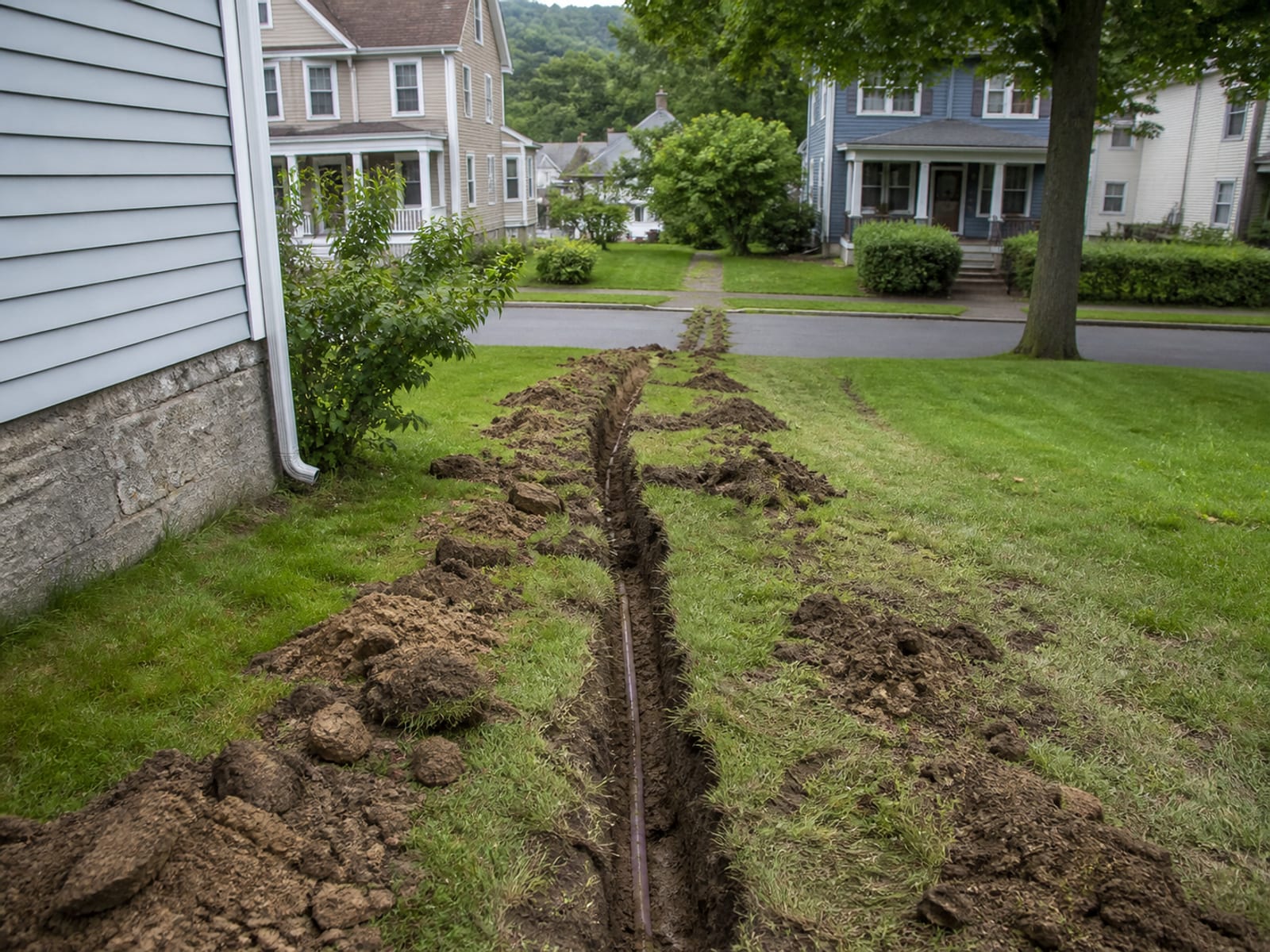
Use this framing for a new or replacement underground electric, gas, communications, drainage, water, or sewer route. The work is route planning, locating, safe excavation, the installation itself, and restoration, usually with more than one party involved. Coordination is the whole job: the excavator, the licensed trade making the regulated connection, the utility, and the permitting offices all have to be working from the same route and the same schedule.
Sewer line excavation in Derby, CT: connection, repair, or disconnect
Derby's Water Pollution Control Authority publishes a dedicated application and its own regulations for this scope. Derby's building permit form flags sewer work as City and WPCA, so the path is not the same as a general building permit. If the work touches a public way, the street opening requirement applies. If the connection is in a state highway, CTDOT review comes before the WPCA permit rather than alongside it.
Water line trench in Derby, CT: service route and final connection
The route, the locates, the current code and utility requirements, permit verification, testing, and restoration all belong in one written scope. Derby publishes a separate plumbing permit application which states that the permit must be obtained before work starts. There is no single correct depth to quote here, and anyone who offers one without seeing the design is guessing.
Choosing an underground utility contractor for Derby, CT
Ask how the route will be verified, how and when 811 gets called, how private lines will be identified separately, what happens where the route crosses existing utilities, who obtains which permit, whether a licensed trade is making the connection and whether that is inside or outside the quoted scope, what protective system applies if anyone enters the trench, and exactly what restoration is included. Prestige Property Maintenance serves Derby from its base in Oxford rather than from a Derby yard, which is worth knowing simply so the access and staging conversation is realistic.
Follow the Sequence That Keeps a Trench From Becoming a Surprise
| Stage | What happens |
|---|---|
| Define the service and the ownership boundary | Service type, start and end points, who owns which segment, connection authority, restoration expectations, and whether a licensed plumber or electrician must make the regulated connection |
| Verify approvals, then schedule locates | Confirm whether the route crosses a City public way, a state highway right of way, or a regulated wetland or adjacent area. The responsible Derby office makes that call, not a contractor's assumption |
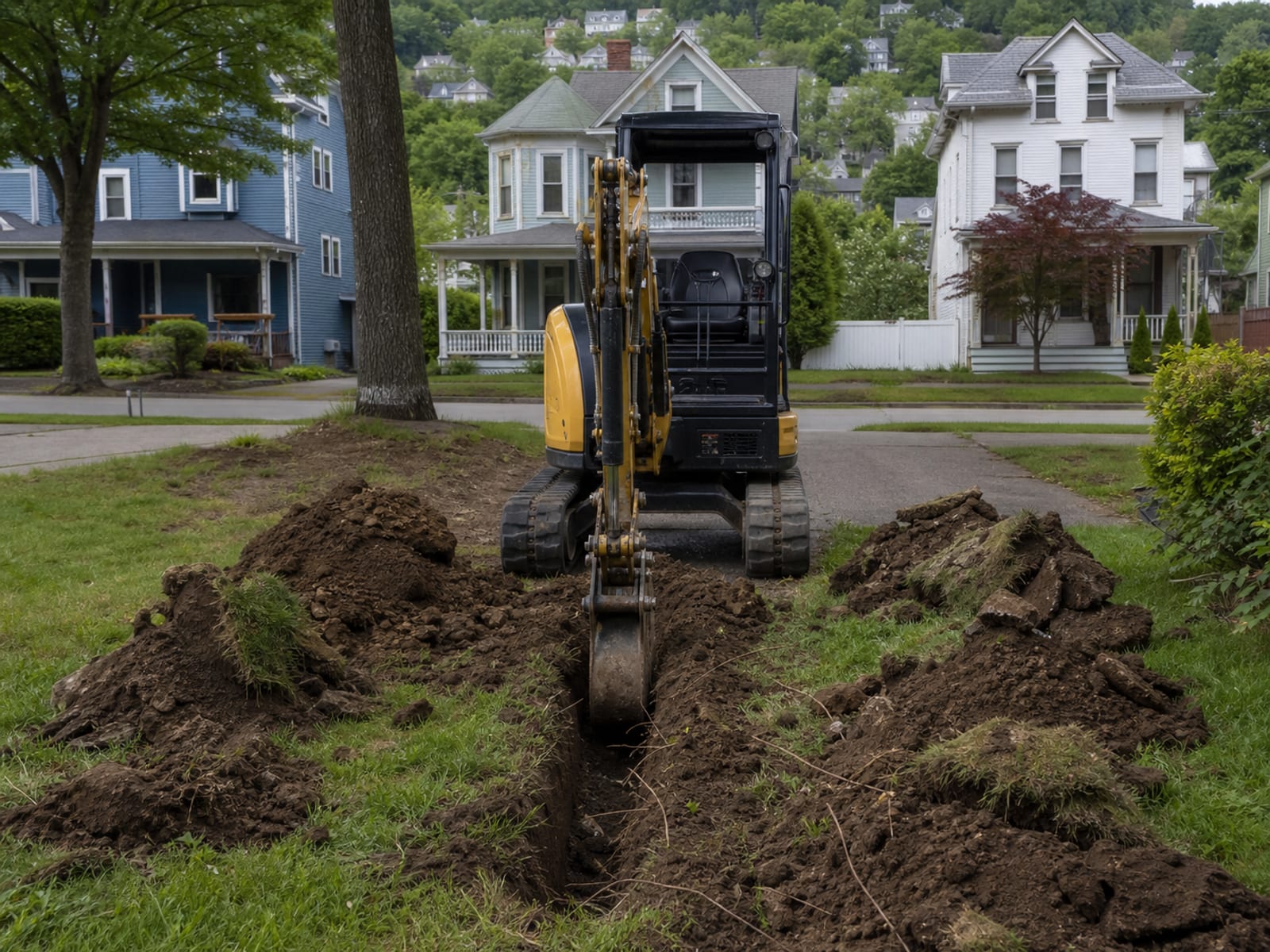
| Set the route, access, protection, and staging | Equipment matched to access and trench volume, protection where machines cross sidewalks, berms, and curbs, and a plan for material and traffic |
| Excavate under competent person oversight | Soil and rock classification, water and surcharge loads, adjacent structures, and the decision on sloping, benching, shoring, or shielding, adjusted as field conditions change |
| Install, connect, inspect, and test | The excavation scope and the licensed connection scope written separately when different parties perform them, with inspection before anything is covered |
| Backfill, compact, restore, close out | Bedding and backfill to the approved requirement, compaction, surface restoration, removal of barricades, and closing out the permits |
Avoid the Mistakes That Cost Derby Homeowners the Most
- Starting before marks and permit verification. The notice window is a scheduling constraint, not a formality, and permits are not retroactive.
- Treating marked public utilities as a complete survey. The one call system reaches registered facility owners. Private lines on the parcel need their own identification.
- Letting a price stand in for a scope. A number without a defined route, depth, crossing plan, and restoration surface is not comparable to anything.
- Ignoring rain and changing ground. OSHA calls for competent person inspection after rainstorms and other condition changing events where workers will enter the excavation.
- Digging into the public way like it is the back yard. A street opening permit and, for a state highway, CTDOT approval come first.
Know Where Your Own Work Stops and a Contractor's Begins
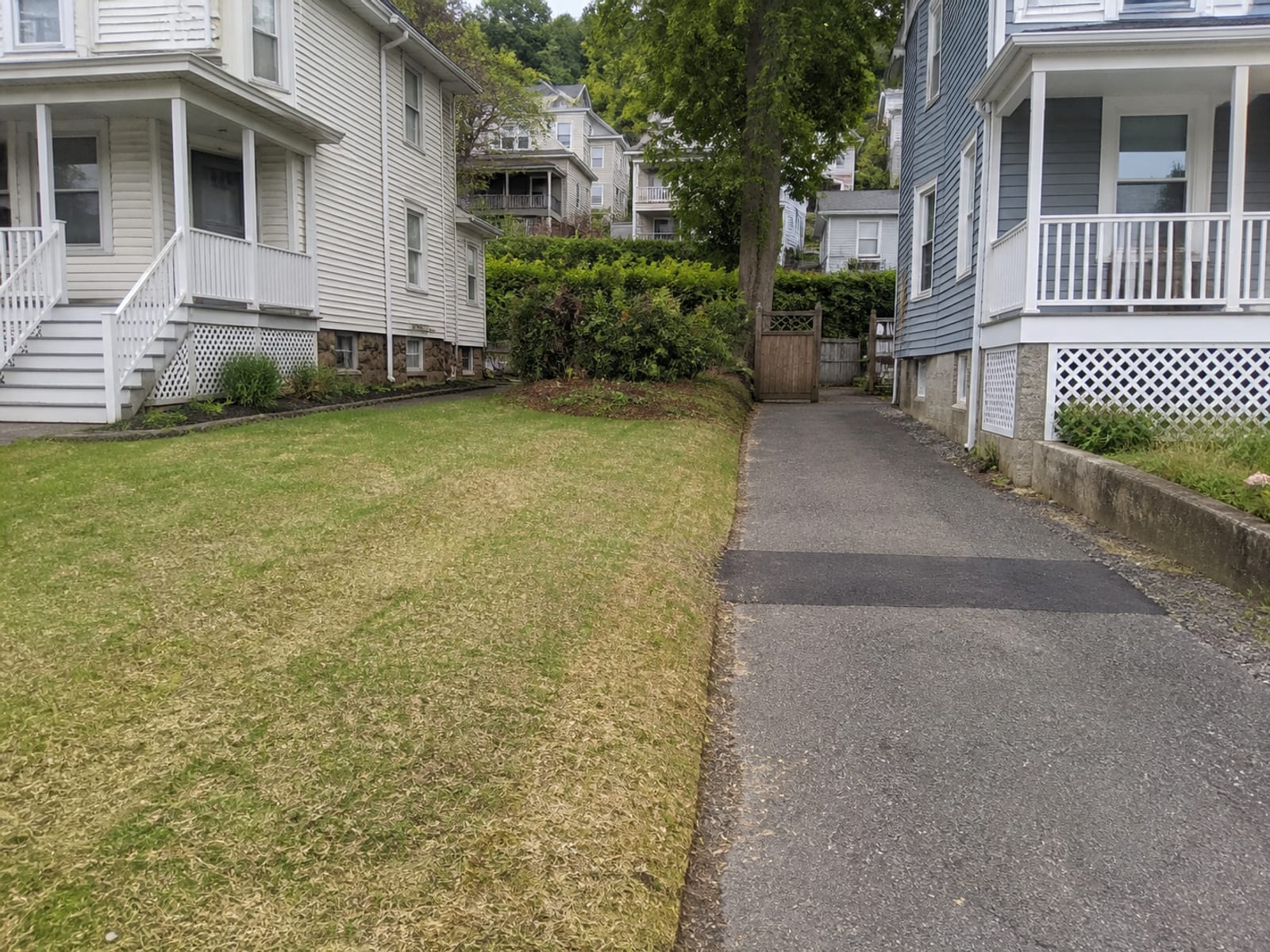
There is real, useful work you can do that has nothing to do with a machine. Write down the history of the problem. Photograph existing conditions before anything is disturbed, including the driveway and lawn you will later want restored. Map the private features you actually know about: the old garage feed, the irrigation, the propane line, the well. Clear vehicles and movable items from the work area. Call the City or the utility and ask which approvals apply to what you are describing.
The line is at the equipment and the regulated work. Planning a route near utilities, making a regulated plumbing or electrical connection, operating excavation equipment around marked facilities, classifying soil, deciding whether a trench is safe to enter, entering it, performing public way work, or deciding wetlands jurisdiction all belong with qualified parties and the issuing authority. OSHA's guidance is clear that a competent person handles soil classification, cave in assessment, water removal monitoring, and inspection after conditions change, and that trenches four feet or deeper need safe access and egress within 25 feet of workers.
Test Your Trenching Assumptions
1. What does a Connecticut 811 locate guarantee?
2. How far ahead must you notify CBYD for a non emergency mechanized excavation?
3. Your sewer connection is in a state highway. What comes first?
4. When does OSHA require cave in protection in an excavation?
Pick an answer to begin.
Frequently Asked Questions About trenching derby ct
Do I need to call 811 before trenching in Derby, CT? Yes, for any excavation using power operated equipment outside of an emergency. The notification has to be at least two full days ahead, excluding Saturdays, Sundays, and holidays, and no more than 30 days ahead. Once the marks are down, they need to be worked into the plan rather than treated as a formality that has been ticked off. Walk the marked route against the intended route before anything starts.
What does utility trenching in Derby, CT cost? No authoritative Derby wide installed cost range was found in any official source, so quoting one would be inventing a figure. What determines it is route length and depth, the line type and connection points, soil, rock, groundwater and weather, utility conflicts and the careful exposure they require, access and staging, whether a worker must enter the trench and what protective system that means, permits and inspections and traffic control, off site disposal or imported bedding and backfill, and the restoration surface. Ask for an itemized scope rather than a single number.
Do I need a permit for sewer line excavation in Derby, CT? Check with Derby WPCA and the Building Department for your specific scope. What is published is that the WPCA has its own application and regulations for a new connection, a repair, or a disconnect, that work in a public way requires a City street opening permit, and that a sewer connection in a state highway requires the CTDOT permit before the WPCA permit is issued.
How deep should a water line trench be in Derby, CT? There is no universal number worth repeating. The depth and the protection depend on the line, the location, current code, the utility owner's requirements, and the approved design. Anyone quoting a single figure for every property is not designing anything.
Can I dig the trench myself and have someone else make the connection? That depends on where the route runs and how deep it goes. Work near marked utilities, any trench a person enters, a regulated plumbing or electrical connection, and anything in a public way all need qualified coordination and the right permits. The safety determinations in particular are not homeowner calls: soil classification and whether a trench is safe to enter are competent person decisions under OSHA.
What if the proposed trench is near a wet area or watercourse? Ask the Derby Inland Wetlands Agency for a determination before work begins. The municipal agency decides jurisdiction and what permit, if any, applies, including for adjacent regulated areas. That is not a question to settle on site with a shovel.
Trenching Terms Worth Knowing
Tap a term to see what it means.
CBYD, 811. Call Before You Dig, the Connecticut notification required before excavating with power operated equipment. It alerts registered facility owners so they can mark their facilities.
What This Means for You
The fear that starts this project, that a machine finds something nobody marked, is a reasonable fear, and it has a real answer. It is not one precaution, it is a stack of them: the locate that reaches registered facilities, the separate identification of private lines the locate cannot cover, the permit path that puts the right authority in the loop before ground opens, and the trench safety rules that apply once anyone has to get in the hole. Each one closes a different gap.
That stack is also how you evaluate whoever you hire. A contractor who talks about 811 and permits and soil conditions and restoration as separate items, with different offices and different timing, is describing the job accurately. One who folds them into a single reassuring sentence has either not done this in Derby or is not planning to do it carefully.
For a water, sewer, electric, or drainage line on a Derby property, Prestige Property Maintenance can walk the route with you, work through which approvals apply, and put the excavation scope and the connection scope in writing separately so you can see where one ends and the other begins. We run trenching, excavation, and drainage solutions with one crew out of Oxford across the Naugatuck Valley. Call us at (203) 258-3395 or contact us to arrange a site visit, and you will get a scope that names the route, the crossings, the approvals, and the restoration rather than a number with nothing behind it.
Related Articles
Trenching Bethany CT: Water, Power, and Septic Lines
No single depth covers every utility line. Trenching in Bethany, CT depends on whether you are routing water, power, or a septic line through rock.
What to Expect from Drainage Work in Derby, CT, Start to Finish
Hired someone for drainage work in Derby, CT and wondering how torn up the yard gets? Here is the real sequence, from utility mark-out to grading.
What to Expect from an Excavation Company in Derby, CT
A machine on your small Derby lot does not have to be stressful. Learn what to expect from an excavation company, step by step, before you hire one.